Phototherapy for Psoriasis
Phototherapy for Psoriasis: Causes, Treatment, and Symptoms
Psoriasis is a chronic autoimmune condition that leads to the rapid growth of skin cells, causing thick, red, scaly patches on the skin. Phototherapy is one of the effective treatments for managing psoriasis symptoms.
Causes of Psoriasis
- Genetics: A family history of psoriasis increases the risk.
- Immune System: An overactive immune response can lead to inflammation and skin cell overproduction.
- Environmental Triggers: Factors like skin injuries, infections, or exposure to certain chemicals can trigger psoriasis.
- Stress: High stress levels can exacerbate psoriasis symptoms.
- Hormonal Changes: Fluctuations in hormones, such as during puberty or menopause, can trigger or worsen psoriasis.
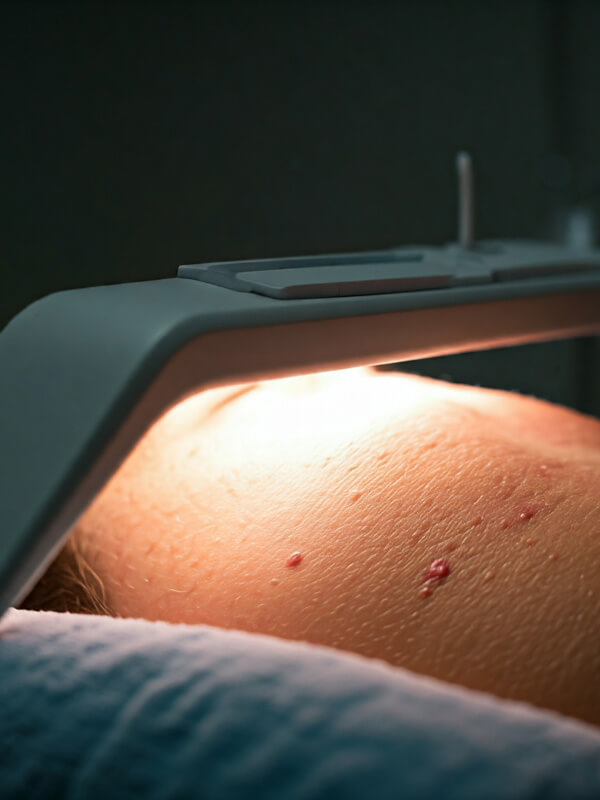
Symptoms of Psoriasis
- Red Patches: Thick, red patches of skin covered with silvery scales.
- Itching and Burning: The affected areas can be itchy and painful.
- Dry, Cracked Skin: Skin may crack and bleed in severe cases.
- Thickened Nails: Psoriasis can affect the nails, causing pitting and discoloration.
- Joint Pain: Psoriatic arthritis can develop, leading to joint pain and swelling.
Phototherapy Treatment for Psoriasis
- Types of Phototherapy:
- UVB Therapy: Exposes the skin to UVB light, which helps slow down the growth of skin cells.
- PUVA Therapy: Combines psoralen medication with UVA light for moderate to severe psoriasis.
- Narrowband UVB: Uses specific wavelengths of UVB light, more effective with fewer treatments.
- Treatment Process:
- Consultation with a dermatologist to evaluate psoriasis severity.
- Sessions are typically held 2-3 times a week, lasting 15 to 30 minutes.
What to Expect During Treatment
- Initial Consultation:
- A dermatologist assesses the condition and recommends a treatment plan.
- Treatment Session:
- Protective eyewear is provided, and the UV light is applied.
- Some patients may experience mild discomfort.
- Post-Treatment Symptoms:
- Common reactions include redness and dryness in treated areas.
- These symptoms typically resolve within a few days.
Benefits of Phototherapy for Psoriasis
- Effective for reducing psoriasis symptoms and improving skin appearance.
- Non-invasive with usually well-tolerated procedures.
- Allows for targeted treatment of affected areas.
- Fewer systemic side effects compared to oral medications.